Skip to content

Ecoscape Cryptocoryne Spiralis 'Tiger' - In Vitro

Original price 8,99 - Original price 8,99
Original price
8,99
8,99 - 8,99
Current price 8,99
In stock

Cryptocoryne Spiralis 'Tiger' - In Vitro Place in the aquarium: front & middle zone Max height of the plant: 15-20 cm Temperature: 22-26 ºC ...

View full details

Ecoscape Cryptocoryne Rubella - In Vitro

Original price 6,99 - Original price 6,99
Original price
6,99
6,99 - 6,99
Current price 6,99
Out of stock

Place in the aquarium: front zone Max height of the plant: 10 cm Temperature: 22-28ºC Light: very much Origin: Sri Lanka - Asia Propagation: Divis...

View full details

Ecoscape Cryptocoryne Usteriana - In Vitro

Original price 6,99 - Original price 6,99
Original price
6,99
6,99 - 6,99
Current price 6,99
Out of stock

Place in the aquarium: middle & back zone Max height of the plant: 50 cm Temperature: 22-26ºC pH: 6.0 - 8.0 KH: 7 - 21 Light: a lot Origin: Sri...

View full details
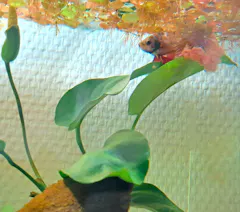
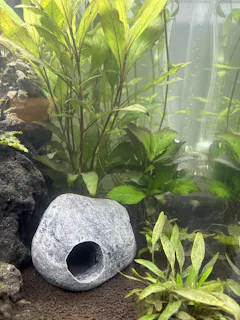
Cryptocoryne is one of the most beloved plant genera within the aquarium hobby – and not without reason.These versatile plants are robust, decorative, and easy to care for. Their wide variety of colors, shapes, and sizes makes them suitable for any type of aquascape: from natural jungle layouts to tightly structured Dutch-style aquariums.

In this collection you will find a wide selection of popular Cryptocoryne species, includingCryptocoryne wendtii,Cryptocoryne balansae,C. parva,C. crispatulaand more. The leaves range from bright green to deep red or bronze, and can be ruffled, smooth, or even spiraled. Some varieties remain low and compact, ideal as groundcover or foreground plants, while others grow taller and fuller, perfect for the mid-ground.

Cryptocorynes are particularly well-suited for low-tech aquariums, as they thrive without CO₂ and with minimal lighting. They prefer a stable environment and thrive in nutrient-rich substrate. A common characteristic is that they can lose their leaves in sudden changes (such as water conditions, movement, or lighting) – a condition known as "Cryptocoryne rot" – but they usually recover quickly and are stronger than before.

Thanks to their slow growth, Cryptocorynes are low-maintenance and combine well with other plants. They don't crowd out species and provide a natural-looking base for any aquarium. Moreover, they are safe for fish, shrimp, and snails.

Whether you're just starting out or a seasoned aquascaper, Cryptocoryne is a reliable, decorative choice that never disappoints.A must-have for any well planted aquarium.